





Compliance technology should not create more noise. It should replace guesswork with clear records, connected systems and information people can trust.
Compliance should not depend on memory, paperwork, guesswork or one person knowing where everything is saved.
When records are scattered across spreadsheets, inboxes, folders, certificates, old systems and handwritten notes, even simple questions become difficult. Who is trained? Who is overdue? Who has the right certificate? Who needs a refresher? Who is allowed to carry out a task? Who has acknowledged the latest policy? Who was on-site when something happened?
These should not be awkward questions.
For team leaders, supervisors, managers, directors, CEOs, MDs and business owners, compliance is part of running work properly. It affects safety, planning, training, risk, accountability, insurance, audits, quality and trust. If the information is hard to find, people lose confidence in the system. Decisions slow down. Mistakes creep in. Important details get missed.

The aim is not to create another system people avoid using. The aim is to make training, records, evidence, responsibilities and follow-up actions easier to manage in the real world, where people are busy, sites are active, teams are moving, contractors are arriving, certificates are expiring and work still needs to get done.
Good technology gives people a clearer picture.
It helps managers see what is happening before something becomes a problem. It helps workers understand what they need to complete, where their records are, and what is expected of them. It helps organisations move away from chasing, checking and hoping, and towards a more structured way of managing compliance every day.
Compliance should not feel like opening a cupboard and hoping the right document falls out.
It should be clear, current and usable.
Training records are only useful if people can find them when they need them.
Too often, records are spread across different places. One certificate is saved in a folder. Another is sitting in someone’s inbox. A spreadsheet has been updated by one manager but not another. A worker completed training months ago, but nobody can find the proof. Someone knows a refresher is due soon, but the date is buried in a file nobody checks until there is a problem.
That is how compliance becomes messy.
Managers need a clear way to see who has completed what, what is missing, what has expired and what is coming up next. Workers also need simple access to their own records, certificates and outstanding training, without having to chase a manager, administrator or HR contact every time they need an answer.
When records are visible, people can act sooner.
A supervisor can check whether someone is ready for a task. A manager can see who needs refresher training. A business owner can understand where the organisation has gaps. An employee can see what they still need to complete and take more responsibility for staying up to date.
This is not about watching people for the sake of it.
It is about removing uncertainty.
If someone is not trained for a task, the answer should be clear before the work starts. If a certificate has expired, the system should make that visible before it becomes a bigger issue. If training is due soon, managers should not have to wait until the last minute to find out.
Good compliance technology puts records where they are needed.
Not hidden. Not scattered. Not dependent on someone remembering to check a spreadsheet.
Clear records help everyone make better decisions.
Training should not require a treasure map.
If someone needs to complete a course, the process should be simple. The right training should be assigned to the right person based on their role, responsibilities, risk level, working environment or development need. They should be able to understand what they need to do, why it matters and how to get started.
This matters because friction kills completion.
When training is hard to find, hard to access or unclear, people delay it. Not always because they do not care. Often, the system simply gets in the way. They cannot find the course. They are waiting for a link. They are unsure whether the training applies to them. They have not been told what needs completing first. They know it matters, but the process feels harder than it needs to be.
That is where technology should help.
A better system makes training easier to assign, easier to track and easier to complete. Managers should be able to allocate courses without relying on long email chains or manual lists. Workers should be able to log in, see what they need, start the training and complete it with minimal confusion.
For leaders, this reduces chasing.
For employees, it reduces uncertainty.
For the organisation, it improves completion, consistency and confidence.
Training should feel connected to the job, not dumped on people with no explanation. A worker should understand why they have been assigned something. A team leader should understand how that training links to the work being carried out. A manager should be able to see progress without sending repeated reminders or digging through separate records.
Good technology does not make learning meaningful on its own.
But it removes the barriers that stop people getting started.
That is important. Because if people cannot easily access training, they are less likely to complete it on time. And if they do not complete it on time, the risk does not stay inside the system. It follows them into the workplace.
The worst time to build compliance evidence is after someone asks for it.
By then, people are already on the back foot. They are searching folders, digging through emails, checking dates, chasing signatures, looking for photos, trying to remember who completed what, and piecing together events from six months ago.
That is not a system.
That is a scramble.

Compliance is easier when evidence is captured during the normal flow of work. Not after the fact. Not when an audit is due. Not when a complaint has been raised. Not when someone suddenly asks for proof.
Evidence should build naturally as people complete training, acknowledge policies, attend site, carry out checks, complete forms, report incidents, update documents and follow up actions.
This could include training completion records, certificate history, policy acknowledgements, attendance logs, inspection forms, equipment checks, incident reports, permit activity, document updates and action tracking.
The aim is not to create more admin.
The aim is to stop evidence disappearing into the fog.
For managers, this means less time chasing information and more time acting on it. For workers, it means their completed training, checks and actions are properly recorded. For business owners and directors, it creates a clearer record of what has been done, when it was done, and what still needs attention.
Evidence matters because it supports accountability.
If a check was completed, there should be a record. If training was assigned, there should be a status. If a policy was acknowledged, there should be proof. If an issue was reported, there should be a follow-up trail. If equipment was inspected, the result should not vanish into a paper form that may or may not be filed correctly.
Good technology captures information at the point where work happens.
That makes compliance more accurate, more current and more useful.
It also helps create a culture where reporting, checking and recording are part of the job, not an extra burden bolted on afterwards.
Compliance gets harder when everything is treated separately.
A person has a role.
That role has responsibilities.
Those responsibilities require training.
That training creates certificates.
Those certificates expire.
Those expiry dates create risk.
If those things are not connected, managers are forced to do detective work every time they need a straight answer.
Can this person carry out this task?
Have they completed the right induction?
Is their certificate still valid?
Does their role require additional training?
Are they approved to work in this area?
Do they need a refresher before they continue?
These questions should not require five systems, three emails and a phone call to someone who might be on annual leave.
Technology should help join the dots between people, roles, training, certificates, expiry dates, permissions and requirements. That way, compliance becomes more than a pile of documents. It becomes a live picture of who is ready to do what.
This is especially important in workplaces where people move between tasks, departments, locations, projects or sites.
A warehouse operative, maintenance worker, contractor, supervisor, driver, cleaner, engineer or site visitor may all have different requirements. Some training may apply to everyone. Some may only apply to certain roles. Some may be required before entering a site. Some may be linked to specific equipment, processes, hazards or responsibilities.
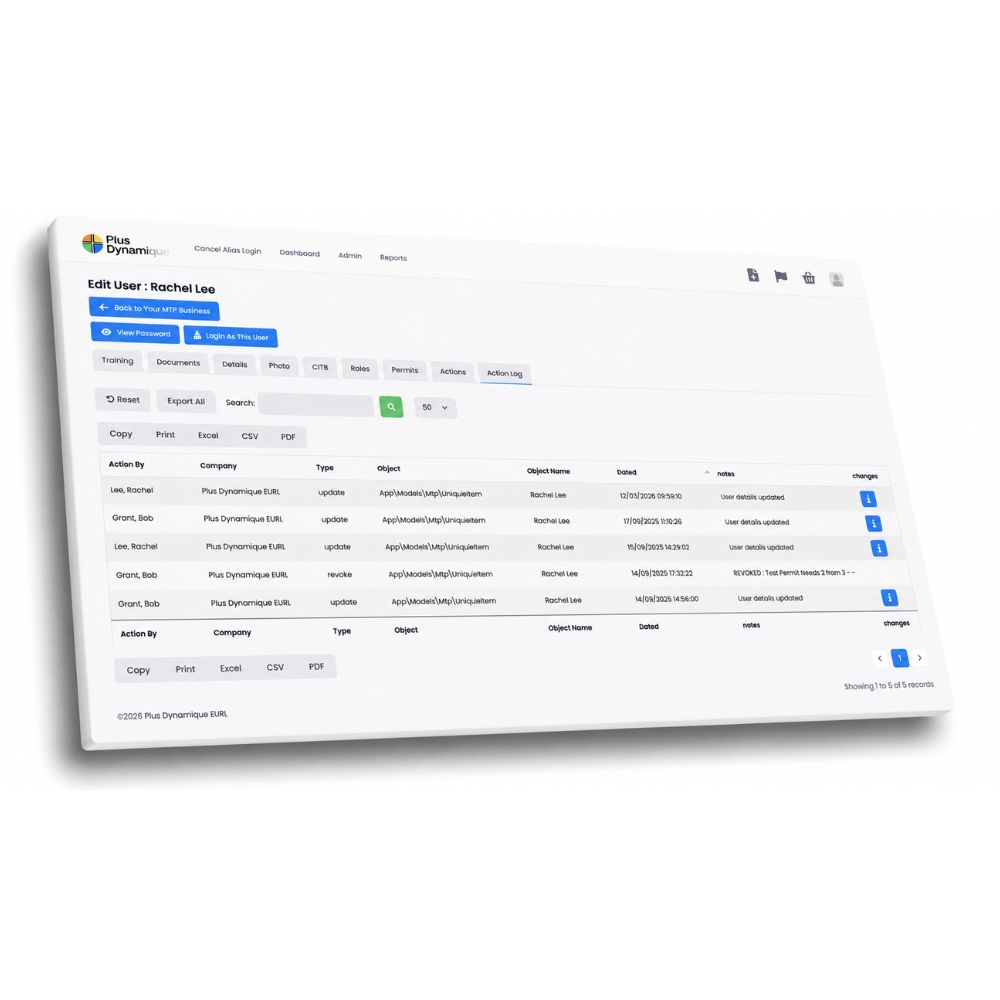
When this information is connected, managers can plan properly.
They can allocate work with more confidence. They can see where training gaps might affect delivery. They can avoid putting people into situations they are not prepared for. They can spot patterns across teams and act before problems build.
Employees benefit too.
They can see what applies to their role and understand how their training links to their work. That clarity matters. People are more likely to take training seriously when it is connected to what they actually do, rather than feeling like a random task added to their workload.
Compliance works better when the system reflects real responsibilities.
Not just names on a spreadsheet.
Technology should not just store information.
It should help people act on it.
A digital system that simply becomes another place to dump documents is not enough. Compliance information needs to be current, clear and usable. Managers need to know where the gaps are, what needs attention, who is ready, who is overdue, what is expiring, what has been reported and what still needs following up.
That live information supports better decisions.
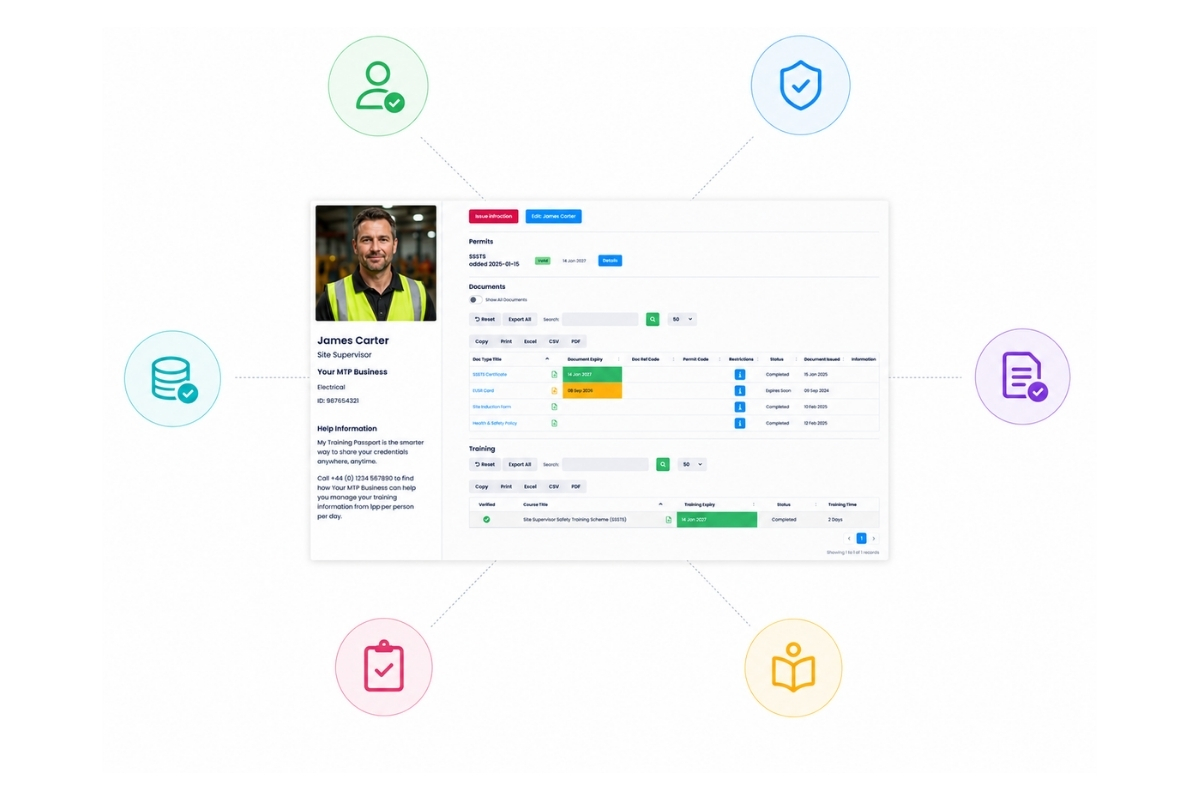
A team leader can see whether someone is ready for a task. A supervisor can check whether a contractor has met the required training before they begin. A manager can identify which team has overdue refresher training. A director can see wider patterns across the organisation. A business owner can understand where compliance risk is building before it turns into a bigger problem.
This helps with training, work allocation, contractor access, equipment use, site attendance, audits, inspections and compliance planning.
It also helps reduce assumptions.
Assumptions are dangerous in compliance.
Assuming someone is trained.
Assuming a certificate is still valid.
Assuming a form was completed.
Assuming a worker has read the latest policy.
Assuming an issue was followed up.
Assuming the spreadsheet is accurate.
Live information gives people something stronger than assumption.
It gives them a clearer basis for action.
This does not remove responsibility from managers or employees. Technology does not replace good judgement, good leadership or a strong safety culture. But it does support better decisions by giving people access to the right information at the right time.
That is the real value.
Not the software itself.
The value is knowing what is happening before something goes wrong.
Making compliance easier with technology is not about adding complexity.
It is about removing the mess.
It is about giving managers, supervisors, team leaders, directors and business owners a better way to understand training, responsibilities, records, evidence, actions and risk. It is about helping employees see what they need to do and giving them easier access to the information that affects their work.
When compliance systems are hard to use, people avoid them. When records are scattered, people guess. When evidence is missing, people scramble. When training is disconnected from roles, people stop seeing the point. When information is out of date, decisions become weaker.
Technology should do the opposite.
It should bring the important pieces together.
People. Roles. Training. Certificates. Expiry dates. Requirements. Attendance. Documents. Actions. Evidence. Reports.
All connected. All easier to manage. All easier to understand.

Compliance should not be a digital junk drawer with a login screen.
It should be a live system people can trust.
A system that helps leaders lead properly.
A system that helps workers stay informed and safe.
A system that makes gaps easier to spot.
A system that makes action easier to take.
A system that turns compliance from a last-minute panic into part of everyday working life.